1644
Marietta Trevisan brings the Vascon estate to Zuanne Loredan as her dowry.
Villa Loredan at Carbonera
The upper hall was painted around 1720. The figures are attributed to Girolamo Brusaferro and the surrounding painted architecture to artists from Emilia. Six large statues in the grounds are attributed to Alvise Tagliapietra.
Did You Know
Timeline
1644
Marietta Trevisan brings the Vascon estate to Zuanne Loredan as her dowry.
1679
A Venetian court settlement clears the title, and Zuanne Loredan rebuilds the house.
1719
Bishop Fortunato Morosini consecrates the oratory of the Madonna of Loreto on 24 October.
1720
The fresco cycle in the upper hall is in place after the redesign by Antonio and Alvise Loredan.
1856
Vincenzo Loredan sells the villa.
1867
Ottaviano Valier buys the villa. The Valier family restores and alters it.
1951
Count Tullio Perocco di Meduna buys the villa. The family still owns it.
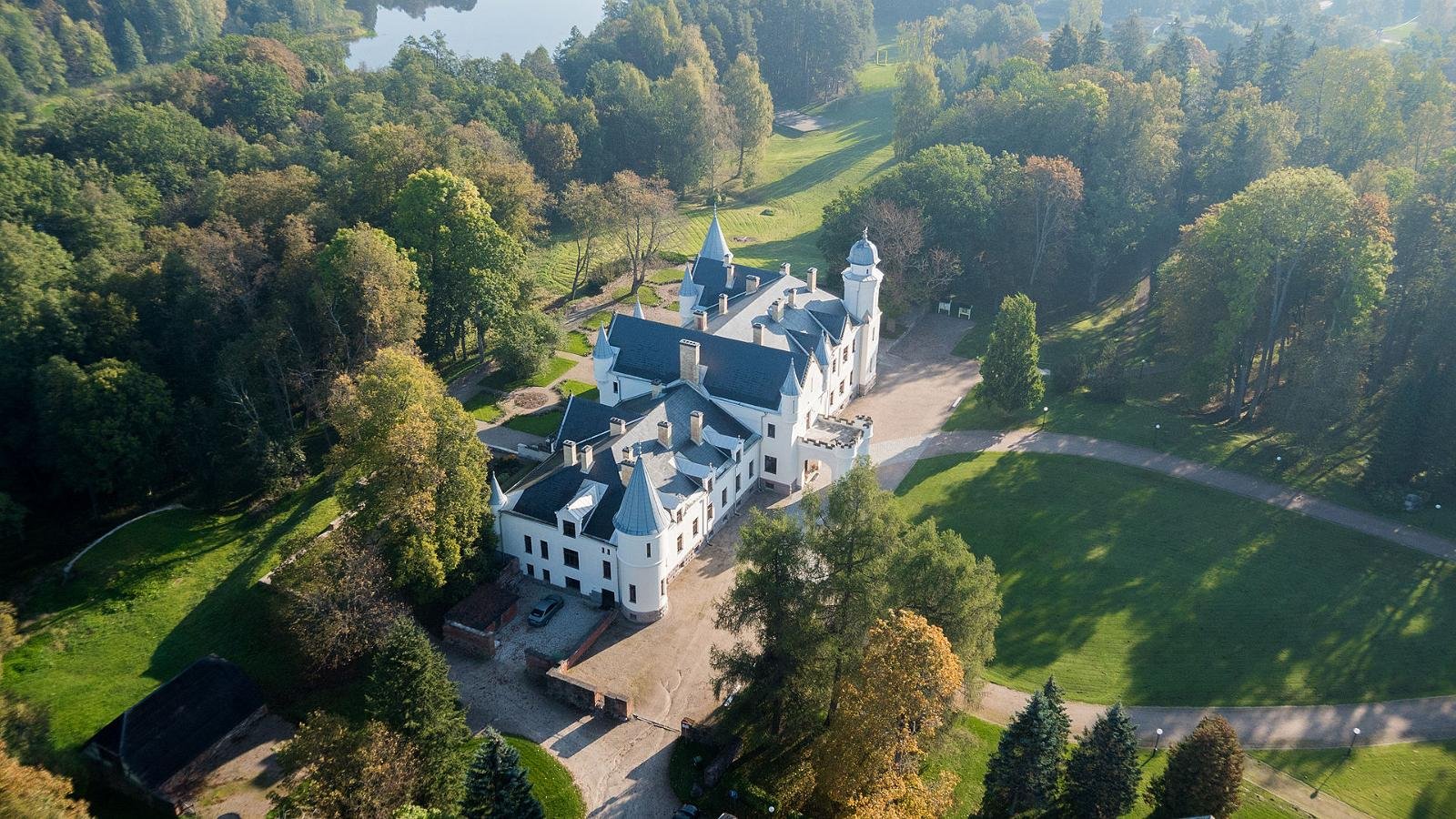
Villa Loredan Valier Perocco di Meduna stands at Via Valier 28 in Vascon, a hamlet of Carbonera, in the countryside north-east of Treviso. It is a private house. Visits and receptions are by appointment.
The land at Vascon was held by the Trevisan family of Santa Maria Formosa from at least the fifteenth century. In 1644 Marietta Trevisan married Zuanne Loredan, of the branch later called di San Vio, and the Vascon estate came to him with her dowry. Another share of the old Trevisan property passed at about the same time to the Boldù family. Dowry and lease rights stayed tangled until a Venetian magistrates' act of 20 June 1679. Only then could Zuanne Loredan, aged 69, rebuild without that burden. The house that followed reused an earlier sixteenth-century core and kept its alignment: a tall block with a raised ground floor, a piano nobile and a low attic under a hipped roof.
From about 1717 his sons Antonio Loredan and Alvise Loredan turned that uneven group into the symmetrical front seen today. Antonio had served the Venetian Republic for decades, including at the defence of Corfu in 1716, after which the Senate made him a Knight of Saint Mark on 12 September 1716. At Vascon the brothers set a lower barchessa of five broad arches on each side of the manor, with small linking wings between the wings and the house. No document names the architect. A link to Andrea Tirali has been suggested on style alone.
The main room on the piano nobile was carried up through the storey above, so the hall rises to a high vault. Iron-railed balconies at both ends could be used by musicians. Toward the garden the wall was opened as a four-column Ionic loggia under a triangular pediment. A later owner, most likely the Valier family, partly closed that opening with narrower arched windows. The original columns can still be read around the infill.
The frescoes in the upper hall belong to the same years, about 1717 to 1720, and were commissioned by Antonio and Alvise Loredan. The figures are attributed to Girolamo Brusaferro. An earlier account gave them to Niccolò Bambini. The painted architecture around the scenes is credited to unnamed painters from Emilia. A smaller vault nearby holds Brusaferro's Bacchus and Venus. On the ground floor, decoration that later owners covered with whitewash has been uncovered again.
Toward the road, separate from the house, is the oratory of the Madonna of Loreto. Fortunato Morosini, Bishop of Treviso, consecrated it on 24 October 1719. It has a small porch of grey marble, a round hall under a low dome and a triple apse. The altar statues of Saint Anthony and Saint Louis of Toulouse are the name-saints of Antonio and Alvise, and both the statues and the carved marble altar frontal are attributed to Alvise Tagliapietra.
Six over-life-size statues in Istrian stone, also attributed to Tagliapietra or his workshop, stand in the grounds. Four of them are the cardinal virtues. They once stood on the roadside wall and have since been moved to the lawn behind the house. The Loredan name is the same as that of three doges of Venice, Leonardo, Pietro and Francesco. They are not recorded as residents of this house.
Vincenzo Loredan sold the villa in 1856. After a short run of other owners, the Venetian patrician Ottaviano Valier bought it in 1867. The Valier family restored it, altered the loggia and the front wall, and kept it until 1940. In 1951 Count Tullio Perocco di Meduna purchased the house. His family repaired it and still owns it.
The house is a central manor between two matching porticoed barchesse, with an eighteenth-century oratory and a walled brolo behind. A spring that feeds the Mignagola rises inside that enclosure, and the park still sits in a surviving pocket of Treviso countryside. The roadside wall, iron grilles and the water ditch in front of the façades are nineteenth-century work.
The villa is the private residence of the Perocco di Meduna family. It is used for private events, receptions and meetings. Visits are by appointment, and the house does not take casual visitors. The estate's own site is villaloredanvalierperocco.it.
Practical details for visiting Villa Loredan Valier Perocco di Meduna. Hours and prices can change — confirm before you travel.
Services
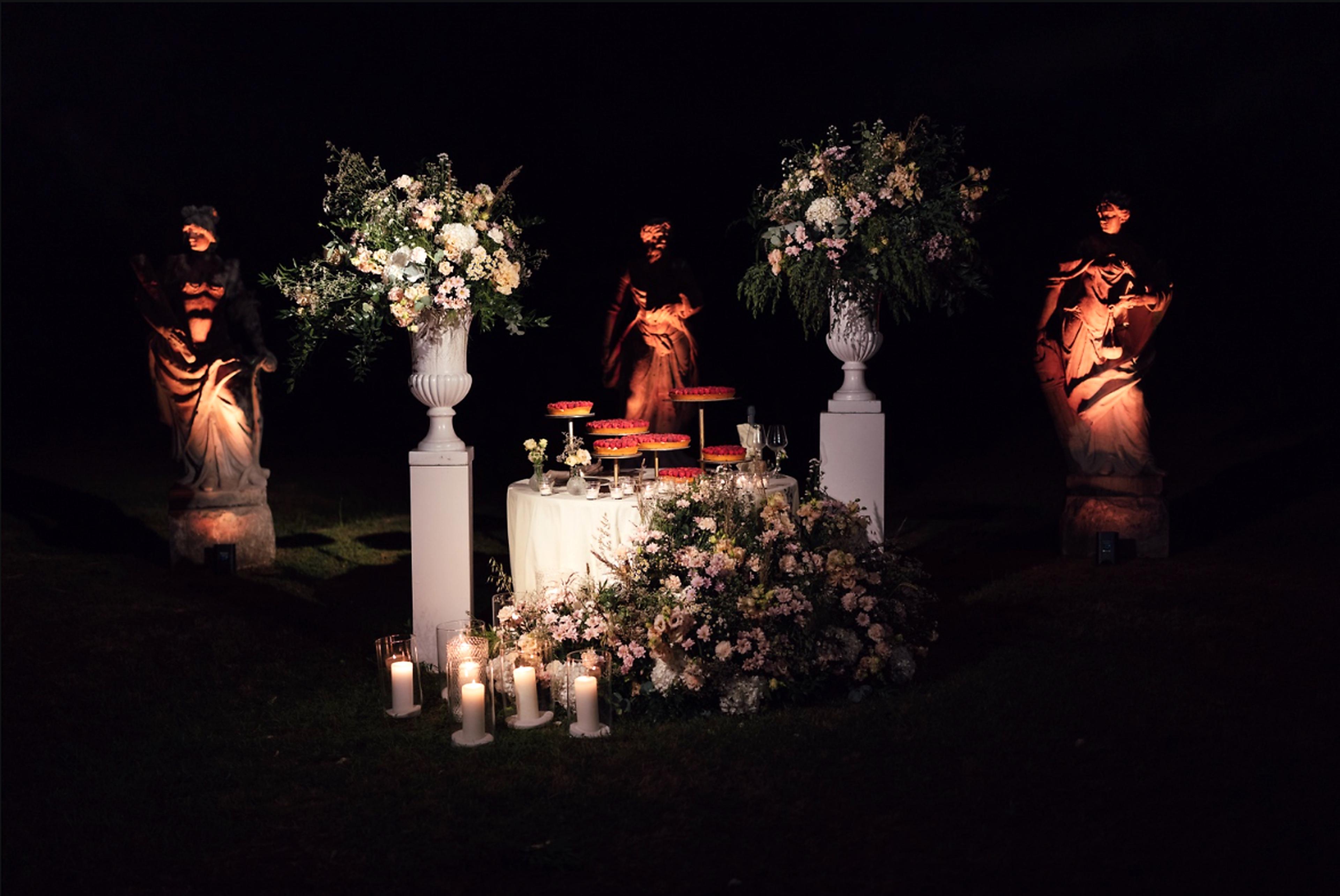
Film productions, fashion shoots and photographic projects in the frescoed halls, the barchesse and the park. Reserved availability, by selection.
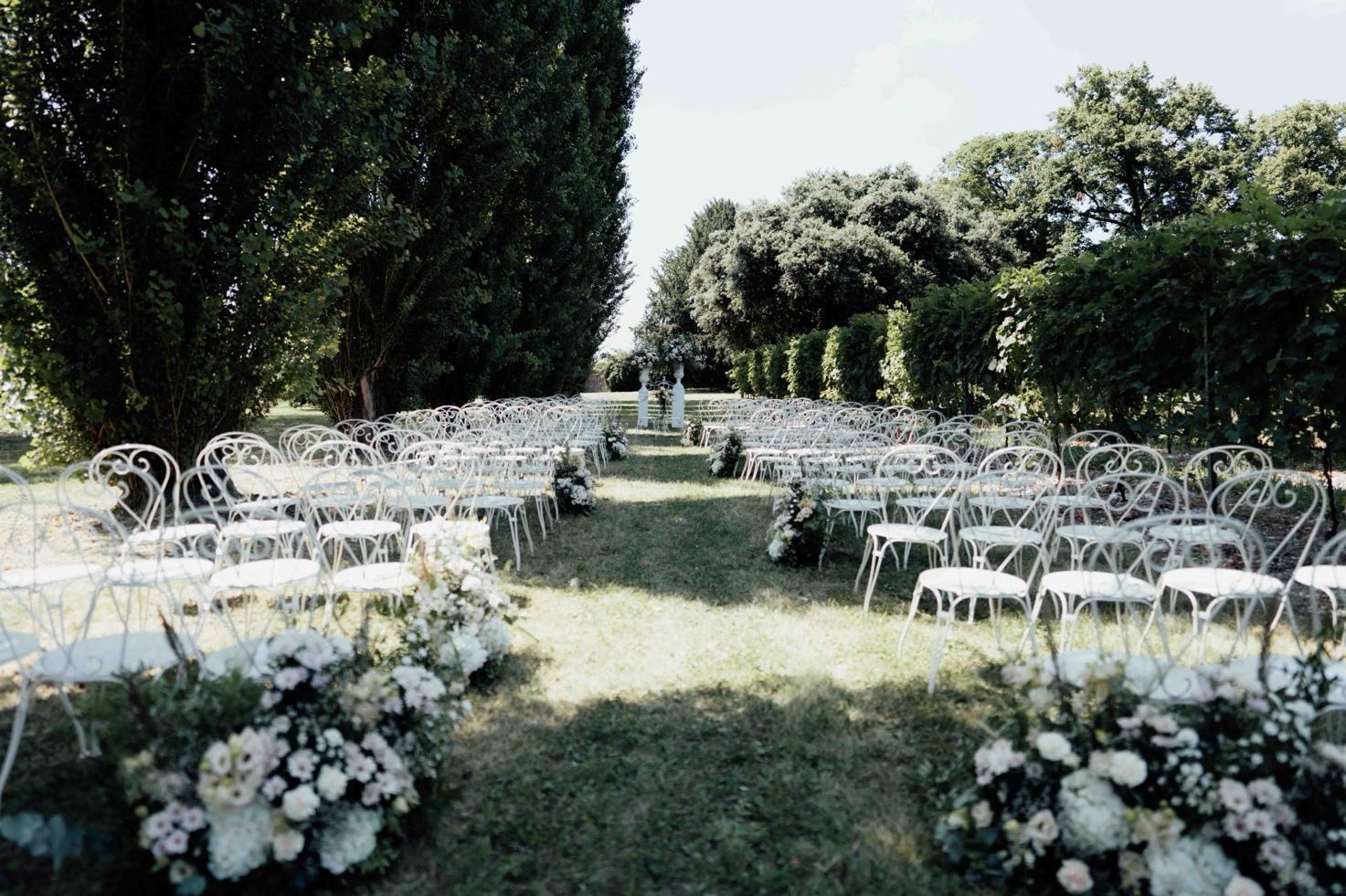
Gala dinners, anniversaries, family occasions. Indoor and outdoor spaces used in continuity, with bespoke arrangements.
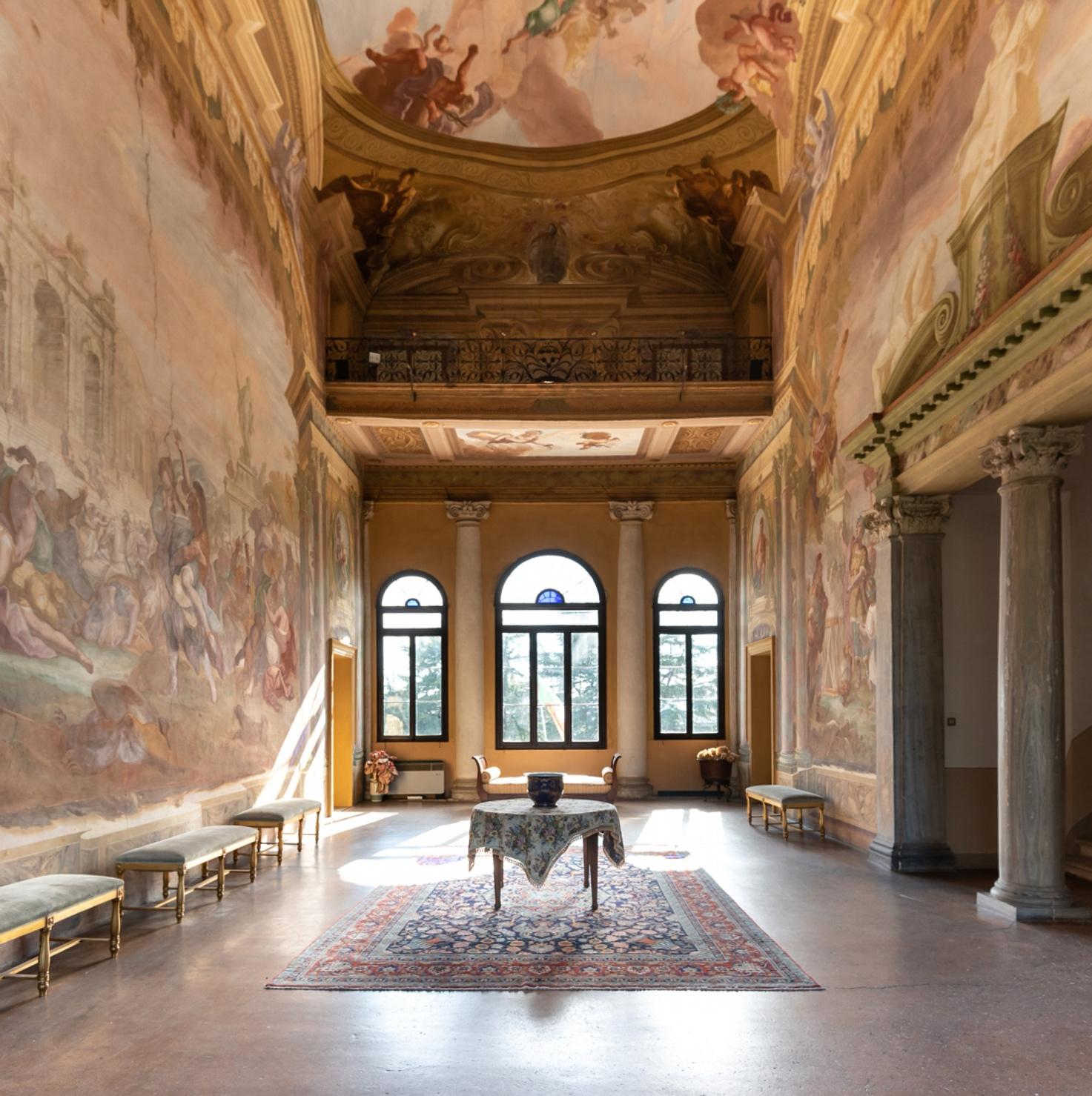
Chamber concerts, book launches, lectures. Reserved availability, by selection.
Gallery
B2B Event Inquiry
Planning a wedding, seminar, or corporate gala at Villa Loredan Valier Perocco di Meduna? Share your requirements and our team will connect you with the estate.
Step 1 of 3
Event Details
Location
Via Valier 28, Vascon di Carbonera, Treviso, Italy
Estate owners
Request ownership to manage photos, details, and event inquiries for Villa Loredan Valier Perocco di Meduna.
Continue exploring