Czocha Castle Zamek Czocha
DID YOU KNOW THAT ...
Flying a drone directly over the castle requires the administrator's permission.
Czocha Castle began as a stronghold, on the Bohemian-Lusatian border. Its construction was ordered by Wenceslaus I of Bohemia, in the middle of the 13th century (1241–1247). In 1253 castle was handed over to Konrad von Wallhausen, Bishop of Meissen. In 1319 the complex became part of the dukedom of Henry I of Jawor, and after his death, it was taken over by another Silesian prince, Bolko II the Small, and his wife Agnes (see Duchy of Silesia). Origin of the stone castle dates back to 1329.
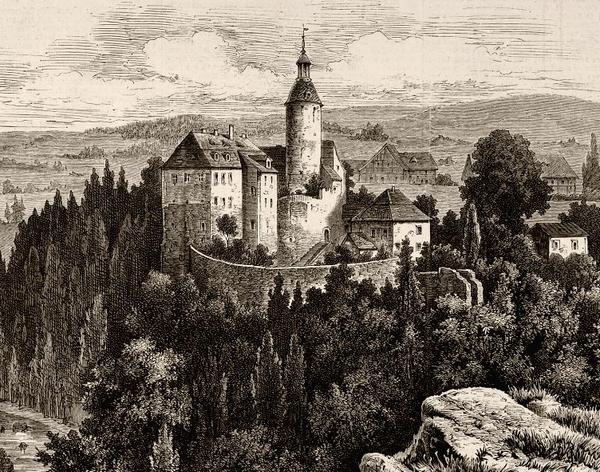
In the mid-14th century, Czocha Castle was annexed by Charles IV, Holy Roman Emperor and King of Bohemia. Then, between 1389 and 1453, it belonged to the noble families of von Dohn and von Kluks. Reinforced, the complex was besieged by the Hussites in the early 15th century, who captured it in 1427, and remained in the castle for unknown time (see Hussite Wars). In 1453, the castle was purchased by the family of von Nostitz, who owned it for 250 years, making several changes through remodelling projects in 1525 and 1611. Czocha's walls were strengthened and reinforced, which thwarted a Swedish siege of the complex during the Thirty Years War. In 1703, the castle was purchased by Jan Hartwig von Uechtritz, influential courtier of Augustus II the Strong. On August 17, 1793, the whole complex burned in a fire.
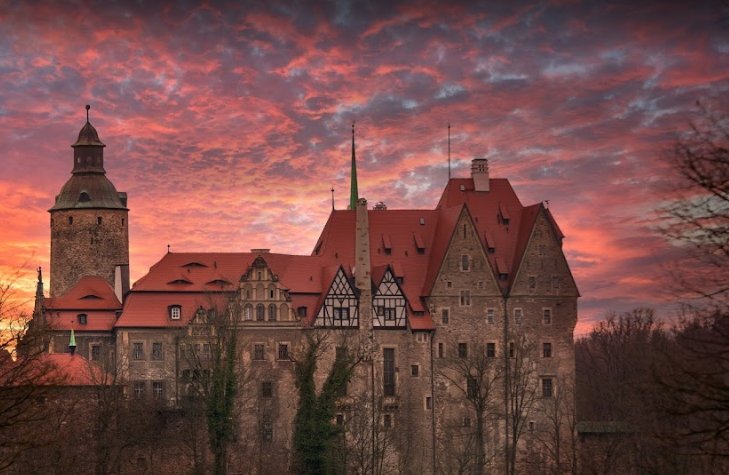
In 1909, Czocha was bought by a cigar manufacturer from Dresden, Ernst Gutschow, who ordered major remodelling, carried out by Berlin architect Bodo Ebhardt, based on a 1703 painting of the castle. Gutschow, who was close to the Russian Imperial Court and hosted several White emigres in Czocha, lived in the castle until March 1945. Upon leaving, he packed up the most valuable possessions and moved them out.
After World War II, the castle was ransacked several times, both by soldiers of the Red Army, and Polish thieves, who came to the so-called Recovered Territories from central and eastern part of the country. Pieces of furniture and other goods were stolen, and in the late 1940s and early 1950s, the castle was home to refugees from Greece (see Greek Civil War). In 1952, Czocha was taken over by the Polish Army. Used as a military vacation resort, it was erased from official maps. The castle has been open to the public since September 1996 as a hotel[1] and conference centre.
The complex was featured in several movies and television series, including a popular 1963 comedy, Gdzie jest generał? (Where is the General?), Legenda, The Hexer (film), The Hexer (TV series), Beyond Sherwood Forest, Spellbinder and serial The Secret of the Cipher Fortress.
Since 2014 the castle is also used as a setting for College of Wizardry, a live action role-playing game (LARP) that takes place in their own universe and can be compared to Harry Potter. There was a hiatus in 2019 after ongoing issues within its founding organization threatened to end the series.[3] However, a crowdfunding action saved the LARP and a new organizing team has continued organizing events at the castle.
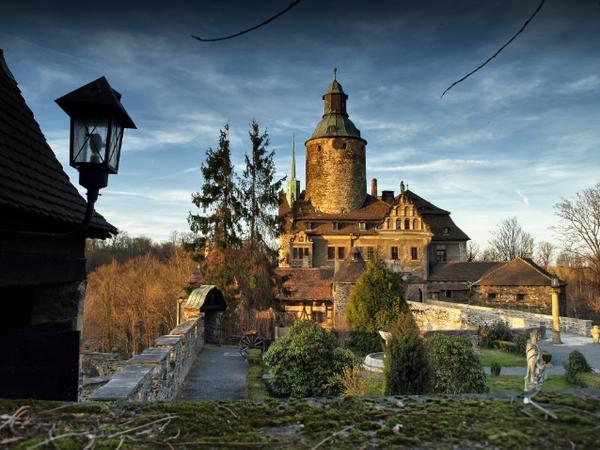
The castle was situated on the left bank of the Kwisa River, on a rocky promontory cutting into the river bend. Thanks to this location, the castle was protected by natural conditions on three sides, and the road could lead to it only from the south. There, behind the ditch, in the foreground of the castle, the outer bailey started to function.
The oldest part of the castle was probably a roughly quadrilateral stone structure, located at the highest point of the area, surrounded by a defensive wall about 2 meters thick, with a round bergfried tower in the south-west corner. It was not directly connected with the defensive walls, but very close to them. The thickness of its walls was about 3 meters. It flanked the access road and the gate, pierced in the curtain of the wall on the west side. A wooden bridge, probably a drawbridge, had to lead to it. The main residential building was in the safest place, in the northern part of the headland. In the ground floor, it was divided into three or four utility rooms, while on the first floor it had one large representative room. The top floor probably housed living quarters. Vertical communication was provided by a spiral staircase embedded in the wall thickness of the south-west corner. The second building, with a chapel and a gallery, was located in the bend of the wall on the eastern side. In the north-east corner it was strengthened by a high buttress.
The rebuilding of the 16th century brought a significant change in castle appearance. An additional line of external walls was then added on the southern side with bastions on a circular and semicircular plan. The northern part of the upper ward was also strengthened, with a rounded wall in the form of a massive bastion facing the river. This wall also protected the castle from the west and from the south, where a corner, four-sided gatehouse was erected, leading to the area of the western zwinger. In the southern curtain, a horseshoe tower and a second entrance gate were located, leading directly to the new residential wing, which absorbed the old tower – bergfried.
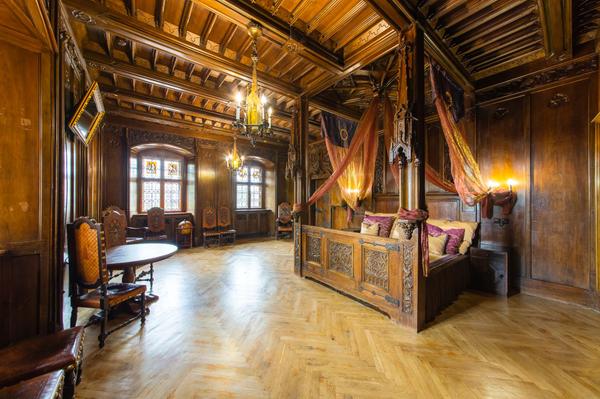
Nowadays, the impressive monumental stronghold is home to an elegant hotel and its historic interiors can be visited like any other museum. Knights' tournaments, dance shows, comedy acts and concerts organised here add to the appeal, along with a stylish café and a restaurant specialising in Polish cuisine. The castle grounds have also been used as the set for many feature films and documentaries. The castle's wine cellar hosts mead-tasting events, promoting this drink so strongly connected to the culture of old Poland and appreciated by gourmets.

- Czocha Castle, Sucha, 59-820 Leśna, Poland, Poland