Státní zámek Vranov nad Dyjí Státní zámek Vranov nad Dyjí
DID YOU KNOW THAT ...
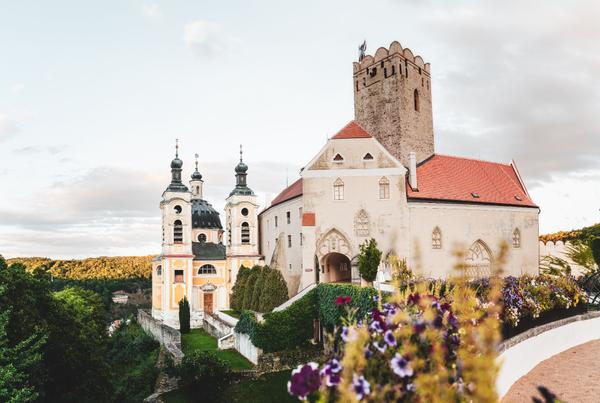
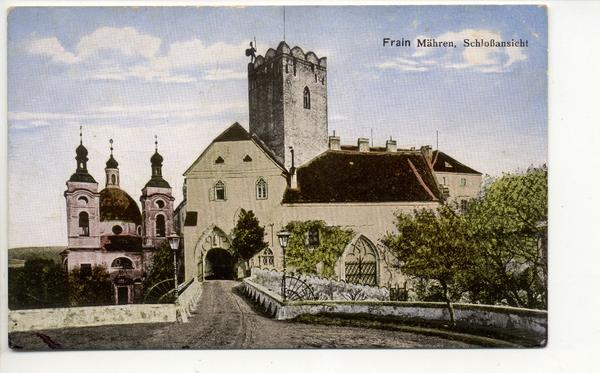
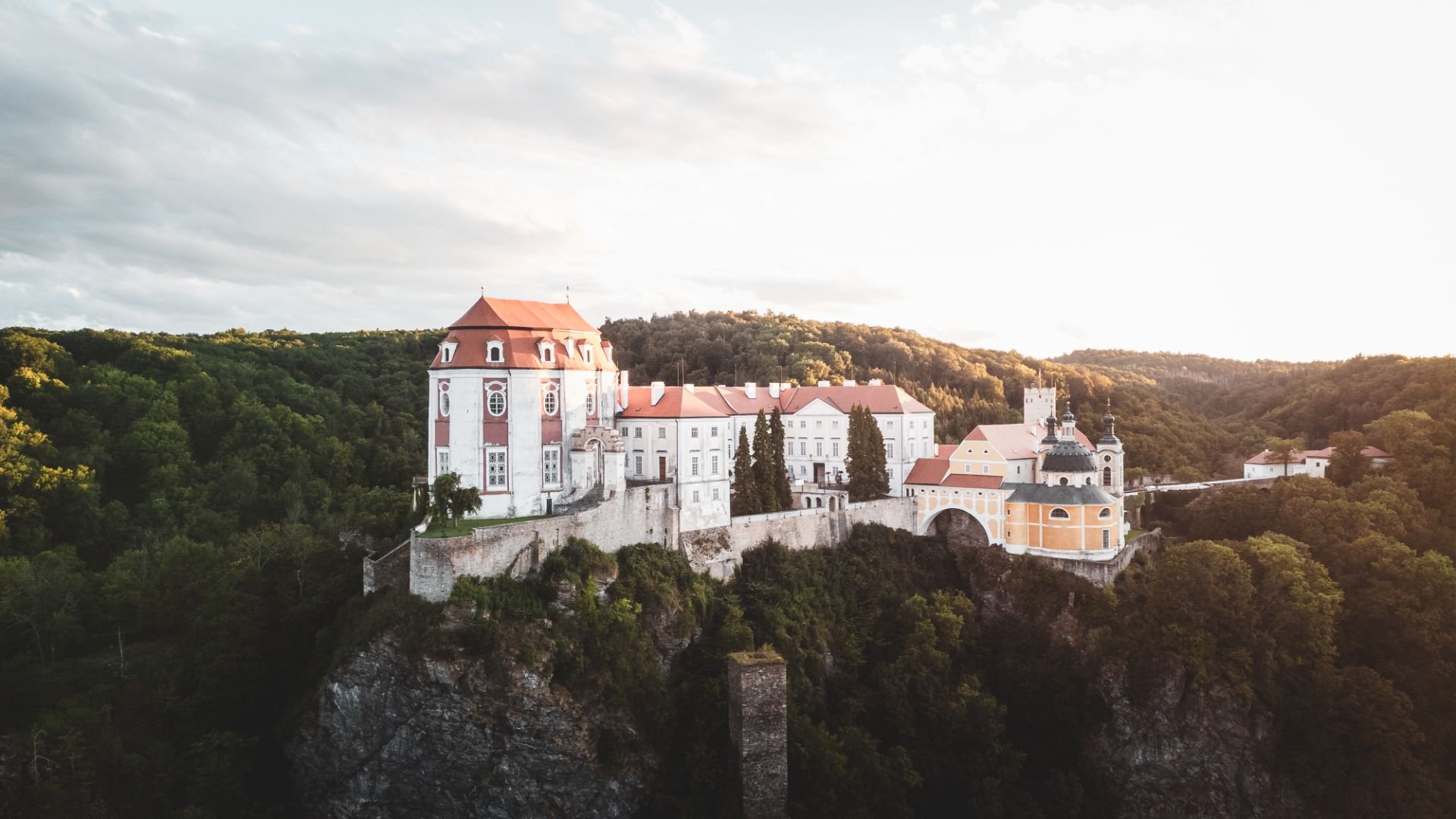
The chateau lies on the southern border of the Czech state about 110 kilometres from Vienna and is one of the most valuable buildings of the Central European baroque. It was created with the reconstruction of a royal castle first mentioned in 1100. Its current form bears the imprint of the Althanns, who held it for some 100 years from the late 17th century, together with a significant contribution from the imperial architect Johann Bernhard Fischer of Erlach. The dominium was then gained by the Polish Mniszeks, who brought about an unprecedented flowering of the famed Vranov factory for the production of earthenware and porcelain. The chateau is in the western part of Podyjí National Park and a national cultural monument. Visitors can not only take tours of the authentic baroque interiors of the Hall of the Ancestors and the chapel, but can also acquaint themselves with the Vranov Chateau lifestyle from the end of the 18th century and throughout the 19th century.
Vranov's location was first mentioned in Chronica Boemorum by Cosmas of Prague in 1100 as a border sentry castle (oppidum (et) castrum Wranou). It was built by the Dukes of Bohemia to defend the southern border of Moravia against raids from the neighbouring Austrian March. Until 1323 the castle was in royal hands but in that year king John of Bohemia pawned Vranov to a powerful Bohemian nobleman, the viceroy Jindřich of Lipá.
In 1421, during the disturbances of the Hussite Wars the Bohemian noble family of Lichtenburg took control of the castle and the contiguous market town. In 1499 it definitely passed on to Lichtenburgs as hereditary possession by the king Vladislaus II of Bohemia and Hungary. The Lichtenburg family held Vranov for almost a century, until 1516.
In the 16th century, Vranov frequently changed the holders (chronologically: lords of Boskovice, Pernštejn family, lords of Lomnice, Kraigers of Krajk and Dietrichstein family). Probably the most significant owners were lords from the Bavarian family of Althann, cousins of the Princes of Belmonte. Wolf Dietrich of Althann purchased the castle in 1614. Nevertheless, seven years later the manor was confiscated due to his participation in the rebellion of the Bohemian Estates. The confiscated castle was consequently sold to one of the Albrecht von Wallenstein's generals, Johann Ernst of Scherfenberg.
Michael Johann II Althann recovered the Vranov estate for the family in 1680. He commissioned the famous Austrian architect Johann Bernhard Fischer von Erlach to design a grand hall, known as 'the Hall of the Ancestors' in the Baroque style as a memorial to his Althann ancestors. It was built between 1687 and 1695. It's an oval construction surmounted by an imposing cupola and became a dominant feature of Vranov. An Austrian sculptor, Tobias Kracker, created large statues of the ancestors in niches around the walls and another Austrian artist, Johann Michael Rottmayr, painted an allegorical glorification of the Althann family in the cupola.
To complement the Hall of the Ancestors with a spiritual element, Fischer von Erlach designed a Baroque chapel, the Chapel of the Holy Trinity, which incorporated an Althann family vault. The richly decorated chapel was built in two years (1699 and 1670). After the death of Michael Johann II Althann more grand buildings were constructed, completing the transformation of the original castle complex into an up-to-date Baroque castle.
In the seventies of the 20th century, it underwent extensive restoration, including the general repair of engineering networks, roofs, facades and preserved walls. The interiors of the first floor - the so-called piano nobile - are being comprehensively reinstalled for the public, the tour circuit is expanded, and the movable fund is restored. A new ticket office and entrance historical exposition are also being established, and the greenery is undergoing a major renovation.
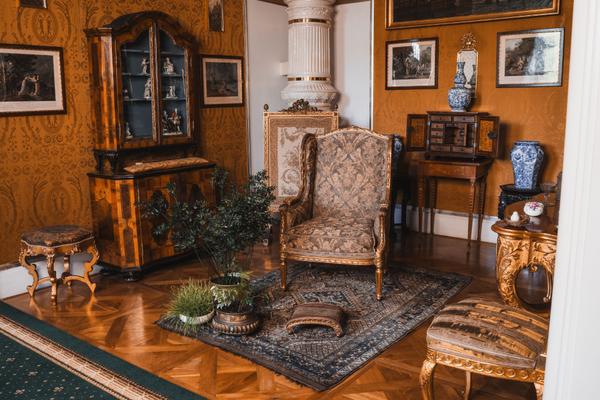
The new installation allows a tour of the hall of ancestors and the chapel as well as other interiors of the castle, which are an indication of living in Vranov from the end of the eighteenth and the entire nineteenth century. In this sense, special emphasis is placed on the original production of the Vranov stoneware factory.
However, Vranov Castle as a living character entity kneaded and shaped by creative human work and historical tradition is not just an isolated artefact. It operates in an organic context with its extremely valuable natural environment, which is part of the first, most strictly protected zone of the Podyjí National Park. The torso of the original forest park with well-preserved small buildings and the authentic free landscape evoke an aesthetic, emotionally colored effect with its botanical wealth, varied fauna and geological rarities.

- Zámecká 93 671 03 Vranov nad Dyjí, Czech Republic