Ammersoyen Castle Kasteel Ammersoyen
DID YOU KNOW THAT ...
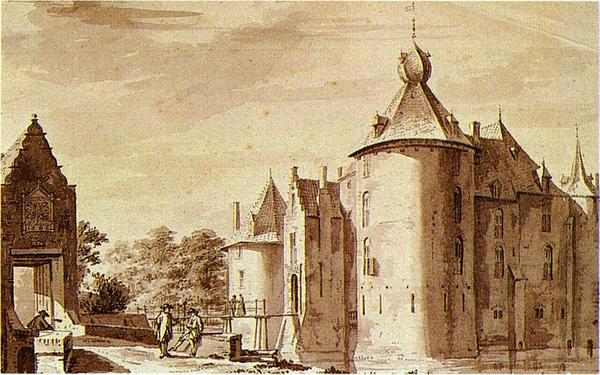
Once the Van Arkels regained enough wealth to rebuild the castle the original architecture had become obsolete. Due to this the original layout was changed severely.
Dirk Van Herlaer, of the Van Herlaer family, built the castle in the 1350s. Upon Dirk's death in 1354, the castle was passed onto his eldest son, Gerhard. Over the next 30 years the castle passed hands numerous times within the family. When Gerhard died, the castle was passed onto his brother, Arent. Gerhard had no children to claim the castle as part of their inheritance, which is the reason it was passed to his brother. When Arent died in 1384, the castle was given to his son, Arent Hoeman. It is under Arent Hoeman where the Van Herlaer's lost control of the castle for good.
The castle is located in the province of Gelderland, the Netherlands. In the late 14th century, Duke William of Gelder's and Julich controlled Gelderland. Arent Hoeman was one of the most trusted friends of Duke William. In 1386 a war broke out due to a land dispute between Gelderland and the Duchy of Brabant. The Burgundians were aggressively trying to expand their territory at this time, and tried to take over parts of Gelderland.
Archaeological findings from the moat on display in the castle
Despite his close relationship with Duke William, Arent Hoeman sided with the Duchess of Brabant. William, unsurprisingly, saw this as an act of betrayal and abruptly ended his friendship with Arent Hoeman. Just days later, Duke William invaded Ammerzoden, capturing both Arent Hoeman and the castle. Thus, in 1386 the castle came under the control of Duke William.
Following the end of the war, Duke Williams gave the castle to his illegitimate son in 1405. His son did not hold the castle for long, as he sold it to Johan Van Broeckhuysen, lord of the Waardenburg, in 1424. The castle only changed hands by marriage for the next 400 years. In 1496, Johan Van Broeckhuysen married Otto Van Arkel, which ended up giving the Van Arkel family control of the castle for centuries. The Van Arkel family was a well-known and quite wealthy family in the region at the time of the wedding. At the end of their rule, the Van Arkels had controlled the castle for five generations.
In 1513, during the Guelderian Wars, the Habsburgs attempted to seize control of the castle from across the River Maas, and briefly occupied the castle. Burgundian troops, led by Count Henrick Van Nassau, occupied the castle for a brief time in the mid-16th century. During the siege and subsequent occupation, the castle was moderately damaged and a large amount of personal property needed to be replaced. At this point in their rule, the Van Arkels were still very rich, so they had the means to repair the castle.The castle was also occupied for a short time again in 1572, when the Spanish invaded the Netherlands. However, the castle was not held long by the Spanish, as Prince Willem Van Oranje and his troops were able to drive the Spanish troops out. This liberation of the castle kept the damage inflicted by the Spanish to a minimum. By 1590, the castle was fully repaired and it was once again almost destroyed, this time by a fire.
The lord of the castle at the time, Joris Van Arkel, died from injuries that he sustained during the fire.
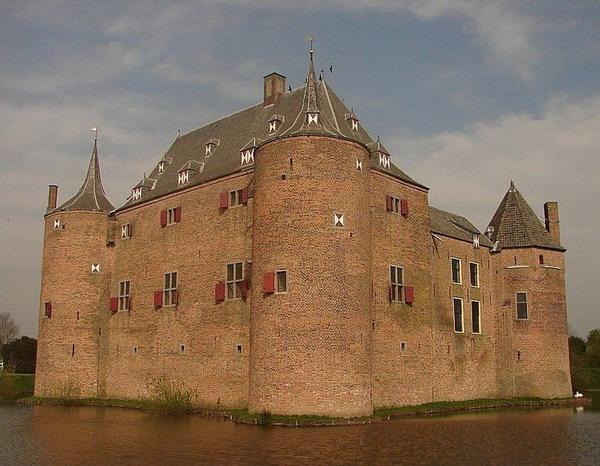
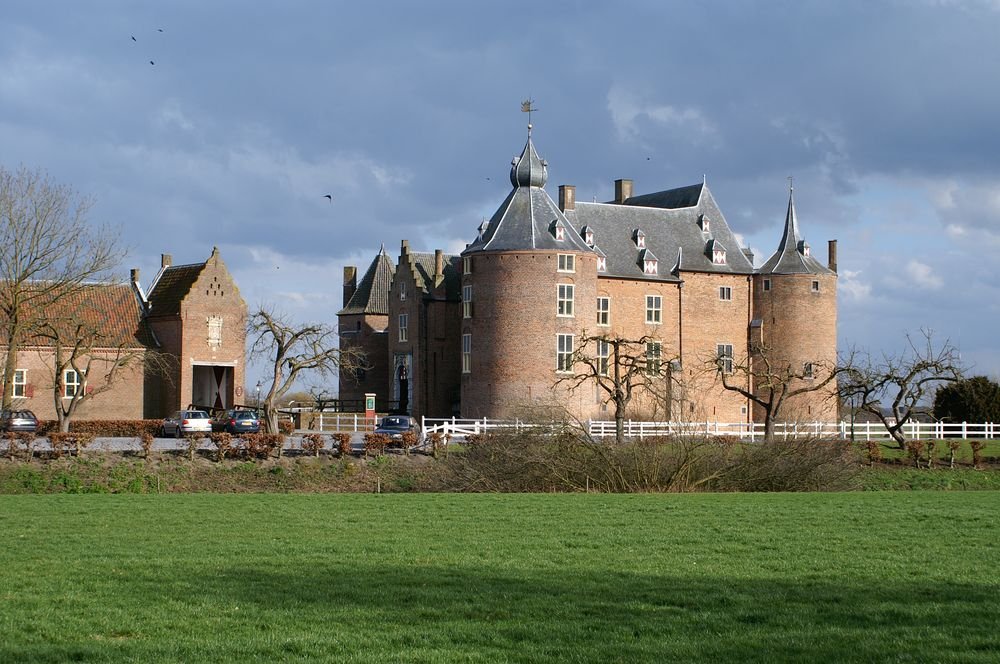
When it was originally constructed, it had a central courtyard, surrounded by four heavy towers on the corners. Connecting these four towers were four heavy wings, one on each side of the courtyard. Ammersoyen Castle is a good example of the type of castle that was made famous by Count Floris V of Holland. Even though it was originally built on a river, the Van Herlaers believed that all four sides of the castle needed to be fortified. To add to the security, the original design included a moat that ensured any attacker could only invade through the front of the fortress. Except for a brief period in the early 20th century, the castle has always been completely surrounded by the moat. The castle was built using a fixed plan, something that was quite uncommon for medieval castles. A fixed plan means that the entire castle was built as a whole, as opposed to multiple phases, which was often the case with other medieval castles.
In 1957, the Friends of Gelderland Castles Foundation bought the castle and made extensive repairs. Over the course of the next 16 years, they were able to restore the castle to its original medieval construction. This meant undoing many of the structural changes that have taken place over the centuries. While this sounds like a very difficult job, many of the changes that had taken place were actually just covered up by plaster and bricks. So recovering the original layout was actually not that taxing. They have restored the rooms to their original size and height, reconstructed chimneys, and moved staircases. The foundation was able to recover numerous artifacts from throughout the castle's history by digging up the filled in moat. Among the pieces found were fragments of pottery, stoneware, glass, silver, bronze, and tin. These artifacts are now on display in the castle's attic. The castle and grounds were fully restored by 1976, and today it is open to the public for tours and other functions. From 1976 until 1999 the castle was used not only as a tourist attraction, but also as an official town hall and meeting place for the local municipality. After the Ammerzoden municipality ceased to exist in 1999, the meetings were moved from the castle.

- Muzeum Zamek w Gołuchowie. Oddział Muzeum Narodowego w Poznaniu, Działyńskich, Gołuchów, Poland, Netherlands