Lietava Castle Hrad Lietava
DID YOU KNOW THAT ...
Lietava castle was never conquered?
History of this castle begins in 13th century and first written mentionship was in the 1318.
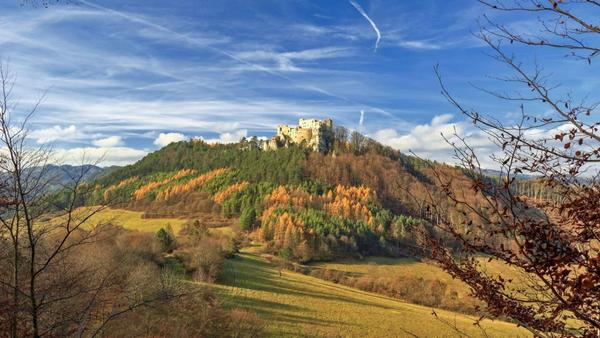
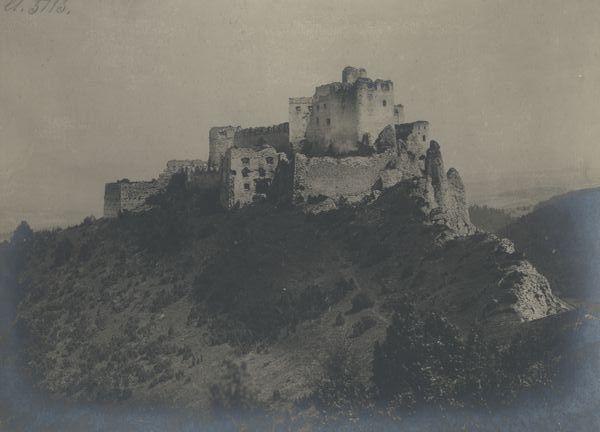
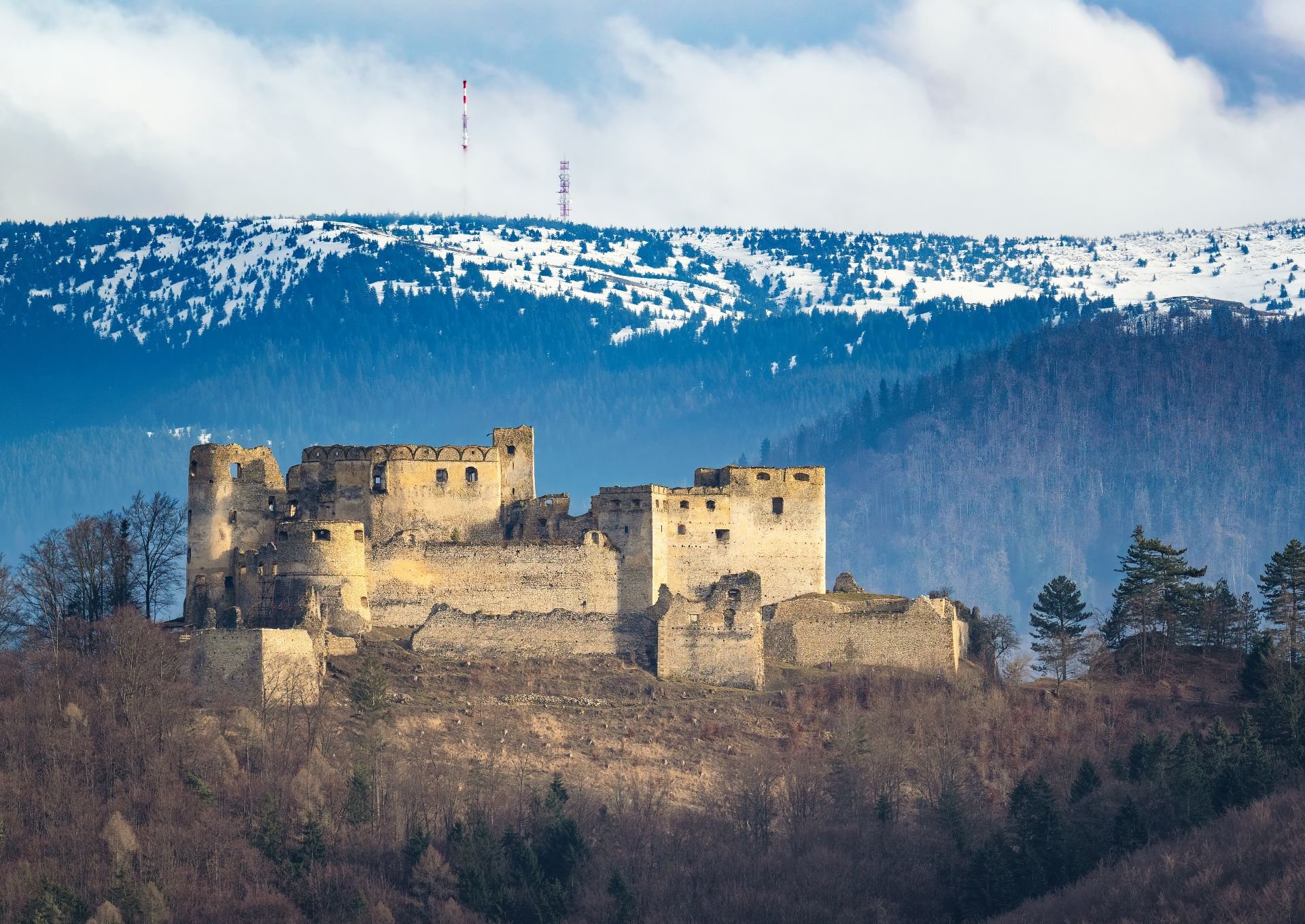
The castle was built after 1241, most likely as an administrative and military centre. It occupies a strategic position alongside the Amber Road, a trade route between Europe and Asia along which amber and other goods were transported. Members of the Balas family are thought to have constructed a four-storey tower, and this was expanded over the years by successive owners.In the early 14th century, it is mentioned with Máté Csák III, one of the powerful magnates in the Kingdom of Hungary. The castle changed hands several times until the 16th century when the Thurzó family gained it. It was reconstructed in the Gothic-Renaissance style and fortified, and given its own military garrison. The weathered remains of this reconstruction are what remains; its past grandeur can be seen in the coats of arms, the renaissance portals, the inscriptions and grand fireplaces. After the death of Imre Thurzó in 1621, it was divided between his heirs. After the ownership disputes in 1641, they lost interest in it. The castle report in 1698 said that the castle was uninhabited and there was only an archive, which was moved to the Orava Castle (Hungarian: Árva) in the 1760s. After that, the castle was abandoned and not used any more.
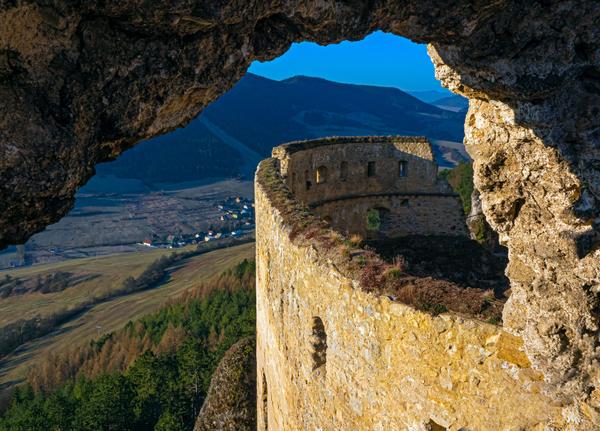
In more than seven centuries of its existence, it went through a long construction development, ending with the Renaissance reconstruction. The demise of the castle is dated around 1760, when it is already mentioned as a building in decay. The base of the castle was a prismatic tower (today preserved to a height of 14 meters). In the eastern direction, a massive castle palace was added to the tower, ending with a chapel. To this day, its walls bear rare architectural details. To the south of the tower is the fifth gate of the castle, and further to the SW are other residential buildings and a late Gothic palace. On the north side of the central castle, the forecourt is finished with a horseshoe-shaped tower and a cylindrical cannon bastion. Parallel to the first rampart runs the second economic rampart with two artillery bastions and a Renaissance front entrance gate.
Wild Tatars ravaged large areas of Hungary and reached as far as Lithuania. The inhabitants of Lietava hid from the Tatars with the parish priest in the church, but they wanted to spare them, lured them out and tortured them there. If they renounce their Catholic faith they will be free. However, after listening to the priest, the people of Letavac refused, so the Tatars threw them off the mountain onto sharp wheels. Finally, they also threw the priest, but he suddenly disappeared. The Tatars were surprised and afraid that the pastor had suddenly disappeared, so they preferred to run away. The priest grabbed onto a thick bush, which also hid him. The remaining airmen saved him with the help of ropes and hooks.
Another legend:
Once upon a time, before Lietava Castle was founded, a Slavic tribe lived on the hill. At the top of the hill they built a shrine with the name Bosnica. This saint was decorated with painted and carved wooden statues. In the center was a chariot of pure gold with swans and doves hitched. In this chariot stood a beautiful maiden with golden hair, together with a crown of myrtle and roses. Fiery glowing rays shot from her heart. She had a diamond globe in her left hand and an apple in her right hand. Behind Bosnica were four more virgins: Dzeva, Lada, Siva, Milostky. There was a stream near the shrines, and on hot days they offered wreaths of flowers, ears of rye and wheat, and honey water to the goddess. A Catholic church was built on the site of the seat of the Slavic tribe.
The castle is currently owned and renovated by non-goverment voluntery organisation Združenie na záchranu Lietavského hradu - Association for saving Lietava castle.
There is situated a small museum and wine cellar, whre you can buy some drink or coffe. It is opened usually during the weekends and in the summer even in the workdays. The rest of the castle is open 24/7 all the year. It can be accessed along a blue marked trail from the village of Lietava, a walk that takes about thirty minutes. It is one of the most-visited castles in the country.

- Lietava 613, Slovakia, Slovakia